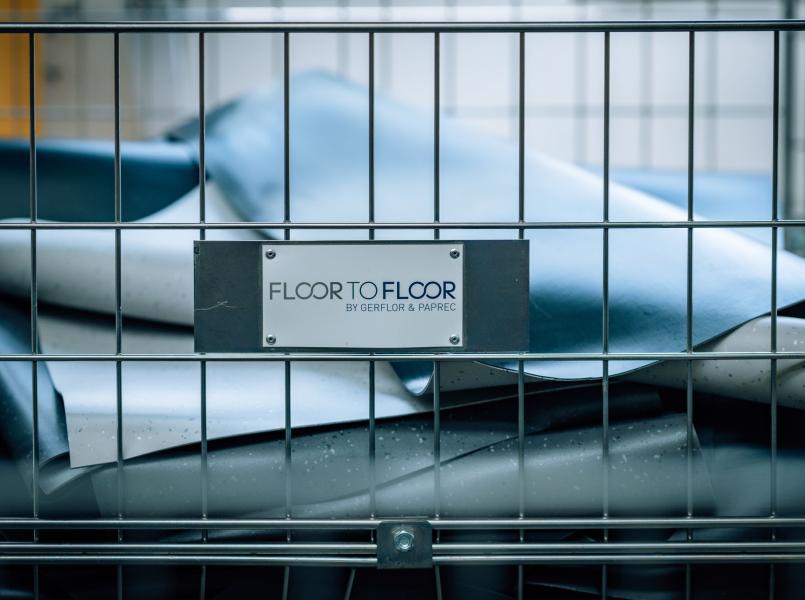
Our recycling program
At Gerflor, we are committed to reducing our environmental impact and pioneering a more circular future for the flooring industry. From using plant-based raw materials to recovering and reusing end-of-life flooring, our global sustainability initiatives reflect more than 20 years of dedication to the principles of the circular economy: reducing, reusing, and recycling.
Global Impact by the Numbers
We believe in measuring our success. Here is a snapshot of the impact our sustainability and recycling programs have had:
- 61,006 tons of material recycled in 2025 through Gerflor plants and dedicated recycling centers.
- 23% average recycled content across all Gerflor vinyl flooring products.
- 100% of Gerflor Group plants operate as recycling centers, recovering production offcuts for immediate reuse.
- Up to 55% recycled content can be incorporated into products manufactured at our eco-designed facility in Saint-Paul-Trois-Châteaux.
- 15% to 24% plant-based materials were introduced into Taraflex® and Taralay Premium in 2024 to replace fossil-based raw materials. Today, more than 80% of the content in these products is bio-based, mineral, or recycled.
- Up to 98% bio-based or mineral materials are used in our DLW Linoleum range, which is Cradle to Cradle Certified® Silver.
- 14% of Gerflor's global revenue in 2025 came from bio-based product ranges, surpassing our goal of 10%.
Frequently Asked Questions
Do you use carbon credits to achieve carbon neutrality across your product lines?
No, Gerflor is committed to reducing its carbon footprint at the source, prioritizing energy efficiency, renewable power, recycling, and cleaner logistics over carbon offsetting. Purchasing carbon credits is not part of our emissions reduction strategy.
Does Gerflor create commercial flooring with recycled content?
Yes. On average, Gerflor vinyl flooring contains 23% recycled content sourced from production scraps, installation offcuts, end-of-life products, and other controlled secondary raw materials.
Does recycled content affect product quality or performance?
No. Recycled materials are carefully controlled and incorporated without compromising product quality, durability, or performance.
What happens to manufacturing waste?
Production scraps generated during manufacturing at Gerflor Group manufacturing sites are collected, processed, and reincorporated into manufacturing to avoid wasting product offcuts.
What is the Second Life program?
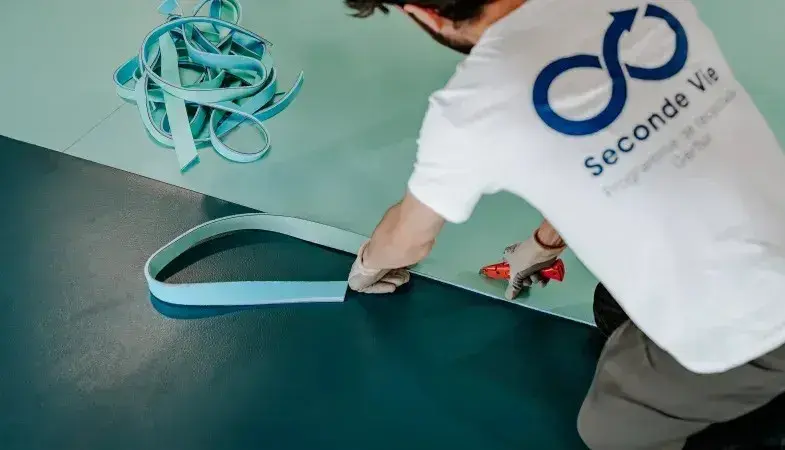
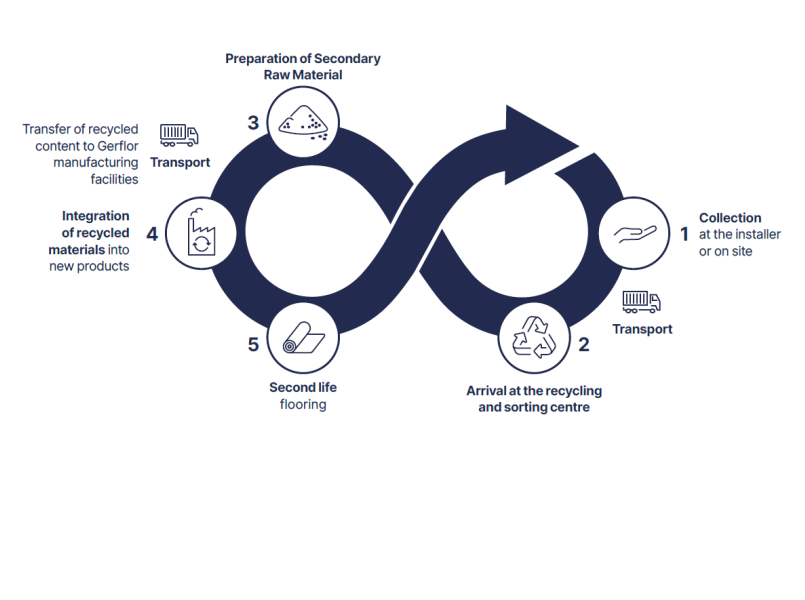
Second Life is Gerflor's European recycling initiative that collects installation offcuts and eligible end-of-life flooring materials and processes them into secondary raw materials for new manufacturing.
Where is the Second Life program available?
The Second Life program currently operates in 12 European countries: France, Germany, Austria, Belgium, Luxembourg, the Netherlands, Norway, Sweden, the United Kingdom, Finland, Poland, and Italy.
Is Gerflor working with industry organizations to develop a recycling program in the U.S.?
Yes. Gerflor is a member of the Resilient Floor Covering Institute (RFCI) recycling working group and collaborates with industry partners to support the development of practical recycling solutions for the US.
How are Gerflor facilities reducing environmental impact?
Gerflor continuously works to reduce the environmental impact of its manufacturing and logistics facilities through investments in energy efficiency, water conservation, waste reduction, emissions control, and material recovery. Initiatives include recycling production scraps within our plants, expanding renewable energy generation, implementing closed-loop cooling systems, recovering waste heat, and optimizing manufacturing processes to reduce resource consumption. These efforts have contributed to a 19% reduction in energy intensity and a 33% reduction in water consumption compared with 2021, while supporting our broader commitment to circularity and responsible manufacturing.